
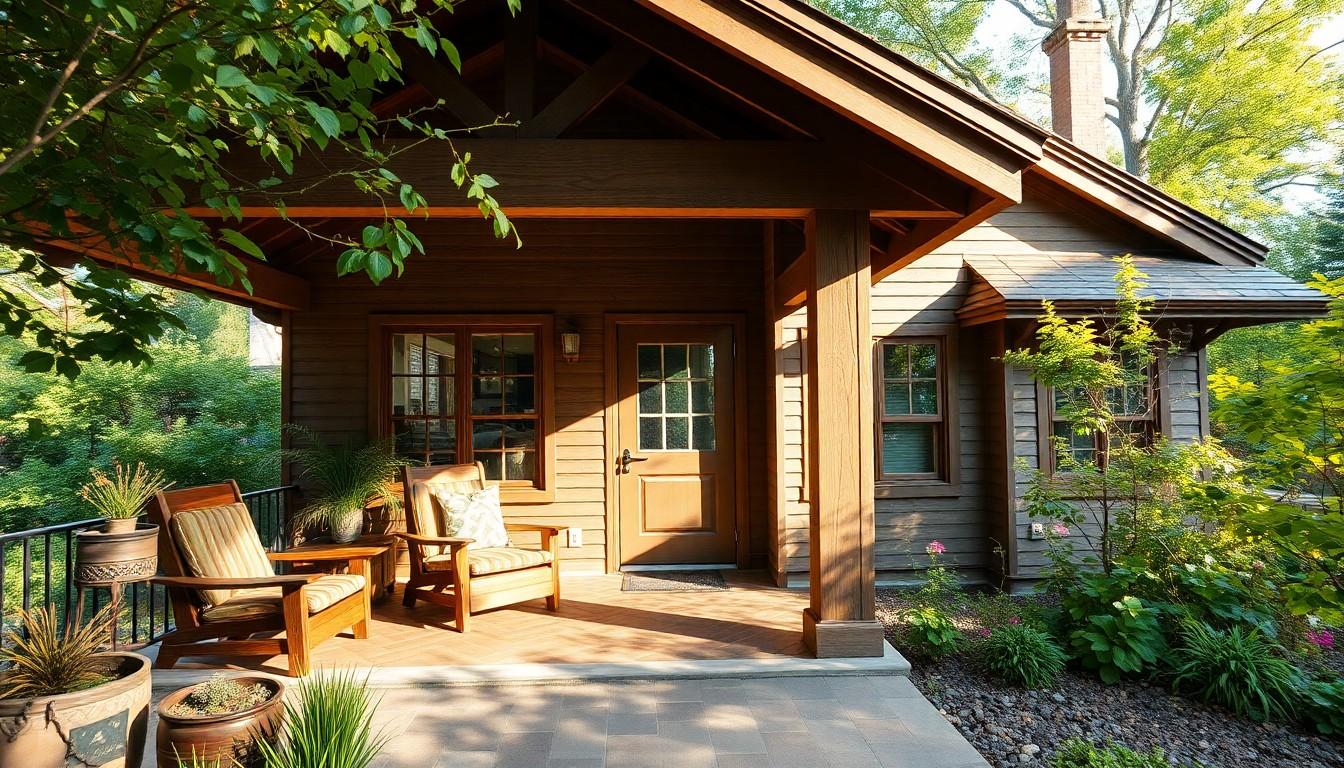
Imagine walking into a home that feels like a warm hug from your favorite childhood craft project. Arts and crafts homes embody a unique charm that marries creativity with comfort. With their handcrafted details and inviting spaces, these homes invite everyone to unleash their inner artist.
Overview of Arts and Crafts Homes
Arts and crafts homes embody a unique architectural style that gained popularity in the late 19th and early 20th centuries. These homes emphasize the importance of craftsmanship, celebrating handmade details over industrial mass production. Warm, natural materials like wood and stone often feature prominently in the design, creating an inviting and harmonious atmosphere.
Design elements typically include exposed beams, built-in furniture, and handcrafted tiles. Craftsmen incorporated local materials, ensuring each home fits seamlessly into its surrounding environment. Open floor plans enhance the sense of space, while large porches and gardens promote a connection with nature.
Textiles and colors play a vital role in defining the interior of arts and crafts homes. Earthy tones and rich colors reflect the natural landscape, creating a serene and comforting ambiance. Decorative arts such as pottery, stained glass, and metalwork further enrich the aesthetic value.
Sustainability frequently characterizes these homes, as the movement sought to counter the negative effects of industrialization. By using durable materials and energy-efficient designs, arts and crafts homes not only stand the test of time but also advocate for environmental consciousness.
This architectural style attracts individuals who appreciate artistry and craftsmanship. Owners often take pride in the unique features of their homes, showcasing custom designs that tell a personal story. Such residences create a sense of community and encourage creativity, inviting inhabitants to express themselves through their living spaces.
Historical Background

Arts and crafts homes originate from a movement that emphasizes craftsmanship and simplicity. This style emerged in response to industrialization, prioritizing artisanal skills and quality materials.
Origin of Arts and Crafts Movement
The Arts and Crafts Movement began in the late 19th century in Britain. Influential figures like William Morris advocated for a return to handcrafted goods. This movement sought to improve design standards and address the negative impact of mass production. Craftsmen and designers aimed to create functional, aesthetically pleasing home environments. The principles embraced by the movement focused on the harmony between the individual and their surroundings. Appreciating nature’s beauty, this approach incorporated local materials and traditional techniques.
Key Architects and Designers
Several architects and designers played pivotal roles in popularizing arts and crafts homes. Frank Lloyd Wright became known for his innovative designs that highlighted integration with the landscape. Greene and Greene, a California firm, set new standards in residential architecture with their finely detailed bungalows. Their work showcased the movement’s principles of craftsmanship and natural materials. Gustav Stickley, an influential furniture maker, emphasized the importance of handcrafted furniture and simple forms. These designers contributed to the movement’s lasting legacy, shaping the distinct characteristics found in arts and crafts homes.
Characteristics of Arts and Crafts Homes
Arts and crafts homes embody a unique architectural style that emphasizes craftsmanship and a connection to nature. They feature specific elements that distinguish them from other designs.
Architectural Features
Arts and crafts homes often showcase low-pitched roofs and overhanging eaves. Natural materials like stone and wood create a seamless integration with the landscape. Prominent exposed beams add structural interest and warmth to exteriors. Large porches encourage outdoor living, while symmetrical facades convey balance. Additionally, handcrafted details, such as built-in furniture and custom windows, highlight the artisanal approach to construction.
Interior Design Elements
Interior spaces reflect the movement’s focus on comfort and simplicity. Earthy colors, inspired by nature, dominate the palette. Textiles such as wool, linen, and cotton enhance tactile richness within the home. Open floor plans allow for spaciousness and fluidity, fostering a cozy atmosphere. Handmade tiles and artisanal fixtures contribute unique character to kitchens and bathrooms, making each area feel distinct and inviting.
Popular Arts and Crafts Homes
Arts and crafts homes exhibit distinct styles and characteristics. These homes reflect the movement’s values, showcasing artistry and skilled craftsmanship.
Iconic Examples Across the U.S.
Noteworthy examples include the Gamble House in California. Designed by Greene and Greene, it exemplifies the California bungalow style with its use of local materials. The Robie House in Illinois, a creation of Frank Lloyd Wright, features horizontal lines and a strong connection to nature. Another significant home is the Frank D. Smith House in Michigan. This residence showcases handmade tiles and unique woodwork, illustrating the charm of the arts and crafts movement.
Notable Regional Variations
Regional variations highlight unique adaptations of arts and crafts designs. In the Southwest, adobe homes reflect local traditions and climate, integrating clay and straw into construction. New England showcases a focus on robust timber frames, often decorated with intricate woodwork. The Pacific Northwest presents homes that emphasize natural surroundings and environmental harmony. Each region’s interpretation of arts and crafts homes reveals unique cultural influences while maintaining the movement’s essence.
Benefits of Living in Arts and Crafts Homes
Living in arts and crafts homes offers numerous advantages that appeal to various lifestyles. One significant benefit involves the emphasis on craftsmanship. Handcrafted details and unique features bring character and individuality to each living space.
Sustainability plays a crucial role in these homes. Built using durable materials, arts and crafts homes minimize environmental impact. Energy-efficient designs contribute to lower utility bills, providing both comfort and cost savings.
Community also benefits from the cohesive aesthetic these homes foster. Arts and crafts neighborhoods often reflect shared values of artistry and quality. Neighbors typically appreciate design principles that prioritize harmony and quality, which strengthens community ties.
Natural materials enhance well-being in these homes. The use of wood and stone connects residents to the environment. Earthy color palettes create inviting interiors, promoting relaxation and creativity.
Functional design improves everyday living. Open floor plans encourage social interactions while ensuring practicality. Ample storage built-in furniture optimizes available space, making homes feel organized.
Varied architectural styles cater to different preferences. From California bungalows to New England timber frames, each type showcases unique cultural influences while adhering to the arts and crafts ethos. This diversity ensures individuals find a design that resonates with their personal aesthetic.
Artistic spaces inspire creativity and self-expression. Handmade tiles and artisanal fixtures not only enhance the visual appeal but also reflect individuality in design choices. Residents often feel empowered to personalize their environments, leading to a greater sense of belonging.
Conclusion
Arts and crafts homes embody a unique blend of artistry and functionality that resonates with those who value craftsmanship and sustainability. Their distinct architectural features and inviting interiors create spaces that not only reflect personal style but also foster a strong sense of community. By embracing natural materials and artisanal techniques, these homes stand as a testament to the beauty of thoughtful design. Living in an arts and crafts home offers more than just shelter; it provides an opportunity for self-expression and connection to the surrounding environment. As the appreciation for these artistic spaces continues to grow, they remain a cherished choice for individuals seeking harmony in their living spaces.